
Lighting that works in practice, not just on paper
Matched to room use
We plan lighting levels and layout around what each space actually does.
Outdoor control options
Sensors, timers and switching are planned to suit access, safety and use.
Set up before handover
We test, aim and configure the finished lighting so it is ready to use.
Lighting that suits the way each space is used
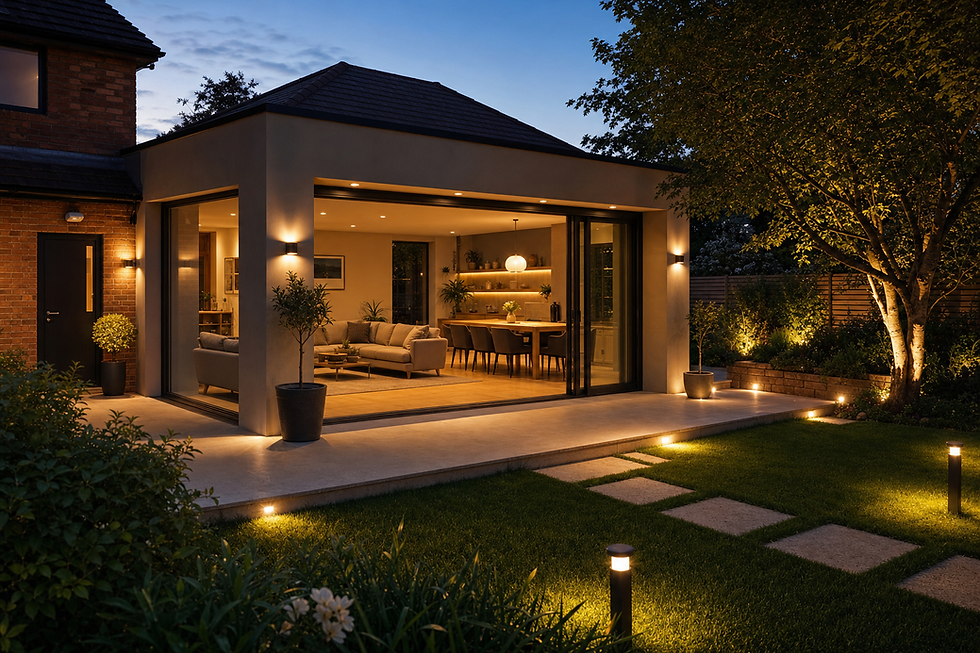
Good lighting does more than stop you bumping into the furniture. Indoors, the right mix can make a room easier to cook in, work in or relax in, while outdoors it can make entrances, paths, gardens and work areas safer and easier to use. We carry out lighting installation work in Garforth for both internal and external spaces, helping you think about ambient, task, feature and LED lighting in a practical way. The best layout depends on how the area is used, where the fittings sit and what sort of control you want over brightness, timing or detection. A row of fittings in the wrong place is still the wrong result, however tidy the wiring is.

Controls, compatibility and practical fitting details
Lighting choices often depend as much on the controls as the fittings themselves. We can help plan switches, dimmers, timers, motion sensors and daylight controls, while checking that the chosen equipment will work together properly. The installation side also matters. Cable routes, switching arrangements, ceiling or wall construction and the need for weather-resistant equipment outdoors all shape how the job is done. Once fitted, we test the lighting, aim adjustable fittings where needed and make sure the controls are set up in a way that makes sense to use. That final part matters, because even the best outside light is not much use if it points at the neighbour's hedge and not your path.
Frequently asked questions
Can you install outdoor security or path lighting?
Yes, we install outdoor lighting for entrances, paths, gardens, work areas and security. The key is choosing suitable positions, controls and weather-resistant equipment, then testing the finished setup so it works where and when you actually need it.
Can existing switches be changed to dimmers or sensors?
Often they can, but compatibility matters. We check the lighting type, the wiring arrangement and the control you want before advising what will work properly. That avoids the common problem of fitting a control that looks right but behaves badly with the lights attached to it.
How do we decide where new lights should go?
We start with how the space is used, what level of light is needed and where glare or shadow would be a nuisance. That gives a much better result than spacing fittings out by eye and discovering afterwards that the worktop, gate or path is still in the dark.