
Accessories planned for how the room really works
More useful outlet positions
We place fittings where they suit furniture, appliances and daily use.
Practical accessory advice
We help you choose the right type instead of fitting something that soon annoys you.
Route options explained
Surface and concealed routes are weighed up before the work is committed.
Better accessory positions make rooms easier to use
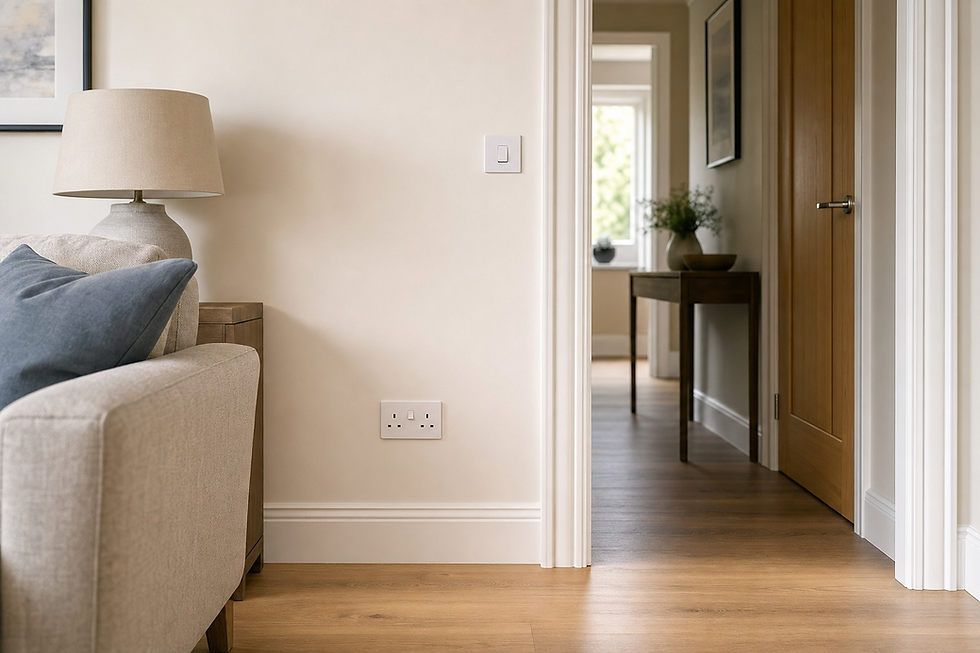
Rooms change. Furniture moves, desks appear, kitchen appliances multiply and the one socket that looked enough ten years ago ends up buried behind an extension lead octopus. We carry out socket and switch installation work in Garforth for new accessories, replacements, relocations and additions linked to renovation or changing room use. That can include standard outlets, switched sockets, USB charging points, fused connection units and weather-resistant outdoor accessories. The aim is not just to add more fittings, but to put the right type in the right place so the room works better day to day instead of relying on adaptors and wishful thinking.

What affects whether a new point is practical
Not every requested position can be added in the same way, so we check the circuit capacity, the likely appliance load, the cable route and the mounting point before work begins. We also explain the difference between surface-mounted and concealed routes, because the neatest-looking choice is not always the least disruptive one. Once the best approach is clear, we isolate safely, make the connections, fit the accessories securely and test the affected circuit properly. That leaves you with fittings that are not only in a more useful place, but are also connected and checked as they should be rather than simply screwed to the wall and hoped for.
Frequently asked questions
Can you add sockets where there are not enough now?
Yes, in many cases we can, but we first check the existing circuit, the expected load and how the cable can reach the new point. That lets us say whether the addition is practical as requested or whether a different approach would give a safer and cleaner result.
What is the difference between surface and concealed routes?
A surface route is usually quicker and less disruptive, but it remains visible. A concealed route can give a tidier finish, though it may involve more disturbance to walls or other surfaces. We explain the trade-off clearly so you can choose what best suits the room and the job.
Can weather-resistant outdoor sockets be fitted?
Yes, where the location and circuit arrangement make them suitable. We assess the position, the likely use and the route needed to supply the point, then fit and test the accessory properly so it is more than just a hopeful box on an outside wall.